
About hip arthritis
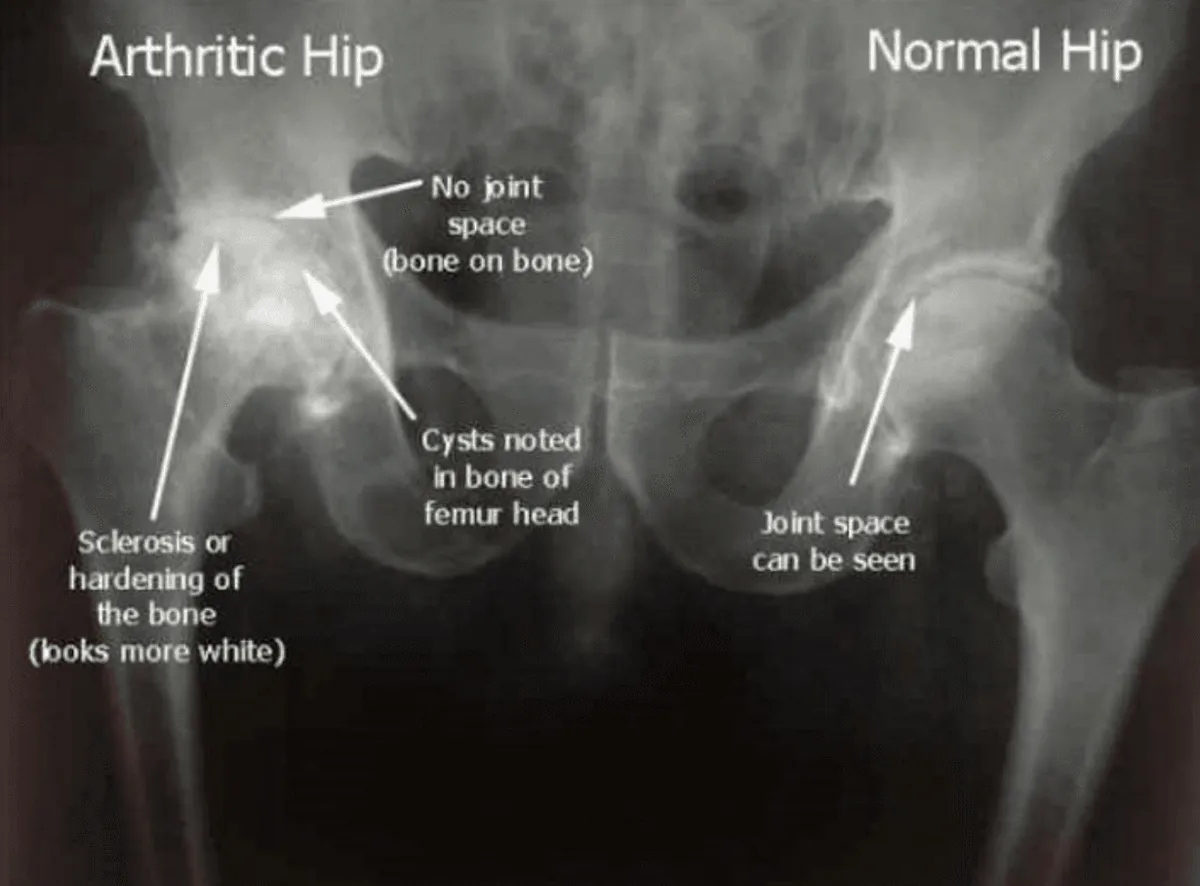
The hip is a ball-and-socket joint lined with smooth cartilage. In hip arthritis, that cartilage gradually thins, the joint lining can become inflamed, and bone spurs may form. The result is pain and a hip that does not move as freely as it used to.
Hip arthritis pain is usually felt in the groin or front of the thigh, not on the outside of the hip. Pain on the outer hip is more often a tendon problem, and pain in the buttock can come from the back. Sorting out where pain truly starts is the first step toward the right plan.
Arthritis does not mean you have to stop moving. For most people, staying active and building strength is one of the best things for the hip, and our job is to calm pain enough to make that possible.
Common symptoms
- Aching in the groin or front of the thigh
- Stiffness after sitting or first thing in the morning
- Trouble putting on socks and shoes or getting in and out of a car
- A limp or pain with longer walks
- Pain that can refer down toward the knee
Common causes and risk factors
- Age-related wear on the joint cartilage
- Hip shape differences, such as impingement or hip dysplasia
- A previous hip injury or surgery
- Family history
- Extra body weight, which increases load on the joint
How we diagnose it
We examine how your hip moves and where pain starts, and we check the back and outer hip tendons, which often mimic arthritis. Ultrasound at the exam table shows joint fluid and inflammation and guides any injection into the deep hip joint. X-rays show how much the joint space has narrowed and help us talk honestly about options.
How Propel treats hip arthritis
Conservative care comes first. A progressive strength program for the hip and core, along with attention to sleep, activity load, nutrition, and body weight, helps many people walk, hike, and train with less pain. An ultrasound-guided injection can calm a flare so rehab can move forward. Orthobiologics such as PRP, BMAC (a concentrate from your own bone marrow), or microfragmented adipose tissue (MFAT; your own fat tissue, gently processed) may ease pain and improve function. They do not rebuild cartilage.
For people with ongoing pain who want to delay or avoid surgery, Dr. Chen offers joint denervation, which quiets the small nerves that carry pain from the hip. When arthritis is advanced and daily life is limited despite these options, hip replacement is a very reasonable choice, and we help coordinate referral and prepare you for recovery.
- PRP
- BMAC
- Lipogems (microfragmented adipose tissue)
- Cortisone Injection
- Guided Injections
- Joint Denervation
- MSK Ultrasound
- Rehab Planning
Watch: Hip Arthritis explained
What to expect at your visit
- 1.
We listen first
Your visit opens with a real conversation: how the problem started, what you have already tried, and the activity you want back.
- 2.
Exam and in-office ultrasound
A hands-on exam, then ultrasound at the exam table, often while you move, so your physician can see the tendon, joint, or nerve involved.
- 3.
A clear diagnosis and plan
You leave knowing what is wrong and what your options are, from strength-based rehab to procedures, and why we recommend each one.
- 4.
Treatment and follow-through
Most procedures happen here in the office. We coordinate with your physical therapist and check progress against the goals you set.
Rehab protocols
Dr. Gruner's week-by-week recovery guidelines. Your plan is individualized; follow these with your physician and physical therapist.
Questions about hip arthritis
- Will PRP or BMAC grow back the cartilage in my hip?
- No. Orthobiologics do not regrow cartilage. They may ease pain and improve function in mild to moderate hip arthritis, which can help you stay active. We explain what the evidence does and does not support for your situation.
- Is walking good or bad for hip arthritis?
- Walking is usually good for an arthritic hip when the amount is built up gradually. Pairing it with strength training for the hip and thigh muscles tends to help most. We help you find the right starting point.
- When is it time to consider hip replacement?
- Replacement is worth discussing when pain limits sleep, walking, or daily tasks despite good conservative care, and X-rays show advanced arthritis. It is a personal decision, and we help you weigh it and coordinate referral when you are ready.