
About gluteal tendinopathy and partial gluteal tendon tears
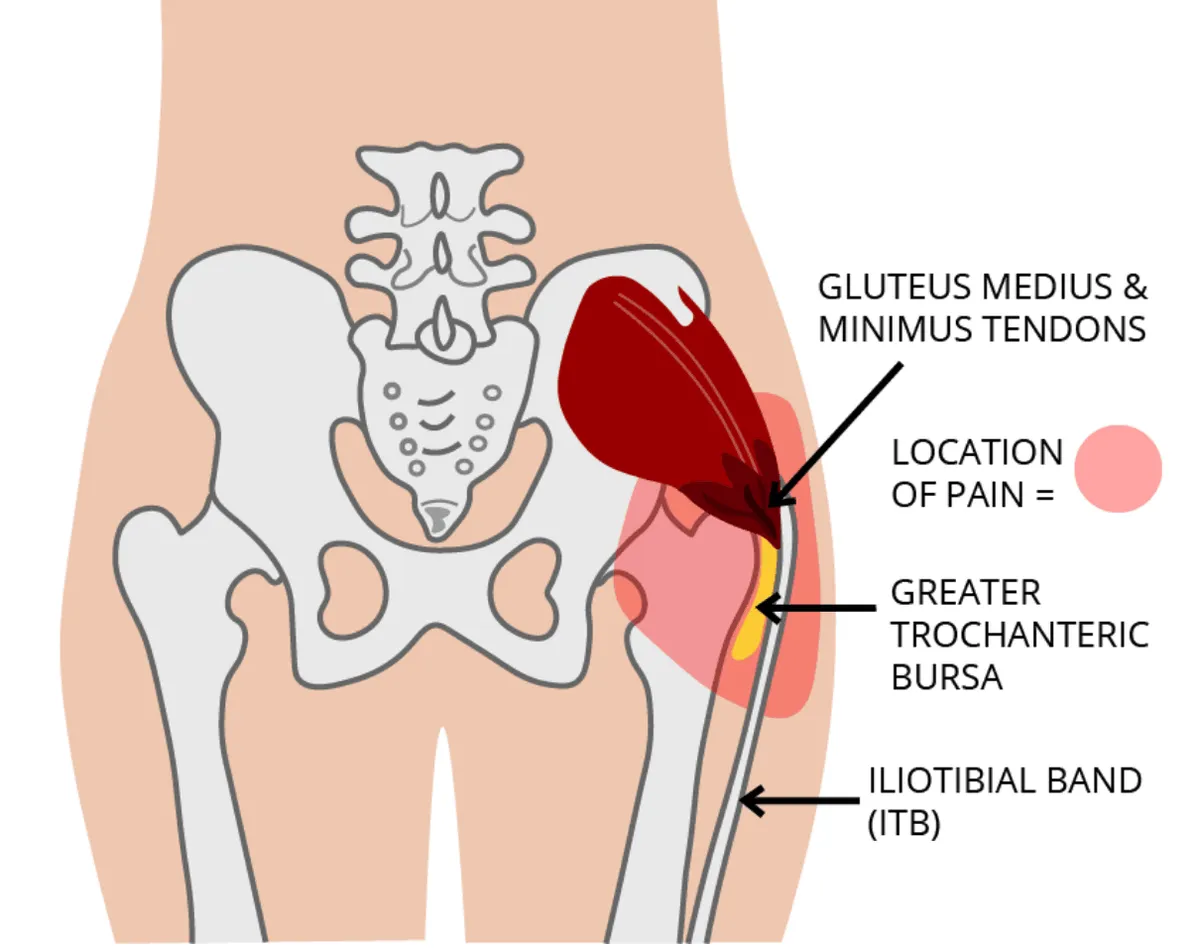
The gluteus medius and minimus tendons attach to a bony point on the outer hip called the greater trochanter. These muscles keep the pelvis level every time you stand on one leg. When the tendons are overloaded or squeezed, they become painful and can develop small partial tears.
This condition used to be called hip bursitis, but the tendons, not the bursa, are usually the main source of pain. It is especially common in midlife, in runners, and in people who have recently changed their activity level.
Common symptoms
- Aching or tenderness on the outside of the hip
- Pain lying on the affected side, which can disrupt sleep
- Pain climbing stairs, walking uphill, or standing on one leg
- Discomfort after sitting with the legs crossed
- Pain that can spread down the outer thigh
Common causes and risk factors
- Sudden increases in walking, running, or hill training
- Hip positions that compress the tendons, such as crossing the legs or standing with the hip pushed out
- Weakness in the hip muscles
- Hormonal changes around menopause
- Low back or hip arthritis that changes how you move
How we diagnose it
We check for tenderness over the outer hip and use tests that load the gluteal tendons. Ultrasound at the exam table shows tendon thickening, fluid, calcium deposits, and partial tears, and it helps separate this problem from hip joint arthritis or pain referred from the back. In rare cases where a complete tear is suspected, we may order an MRI.
How Propel treats gluteal tendinopathy and partial gluteal tendon tears
The foundation is a progressive loading program that strengthens the gluteal tendons, along with changes to sleeping and sitting positions that compress them. Recovery tends to go better with good sleep and sensible training load. An ultrasound-guided injection can ease a flare, and PRP is an option for stubborn tendinopathy and small partial tears, since it can support tendon healing.
For pain that persists despite these steps, Dr. Chen offers ultrasound-guided nerve ablation, including a technique he has published for resistant greater trochanteric pain syndrome, and peripheral nerve stimulation. Both target the nerves carrying pain rather than the tendon itself. Large or complete gluteal tendon tears may need surgical repair, and we help coordinate referral when that is the case.
- PRP
- Tenex
- Cortisone Injection
- Guided Injections
- Shockwave
- Nerve Modulation
- Nerve Ablation
- PNS
- MSK Ultrasound
- Rehab Planning
What to expect at your visit
- 1.
We listen first
Your visit opens with a real conversation: how the problem started, what you have already tried, and the activity you want back.
- 2.
Exam and in-office ultrasound
A hands-on exam, then ultrasound at the exam table, often while you move, so your physician can see the tendon, joint, or nerve involved.
- 3.
A clear diagnosis and plan
You leave knowing what is wrong and what your options are, from strength-based rehab to procedures, and why we recommend each one.
- 4.
Treatment and follow-through
Most procedures happen here in the office. We coordinate with your physical therapist and check progress against the goals you set.
Rehab protocols
Dr. Gruner's week-by-week recovery guidelines. Your plan is individualized; follow these with your physician and physical therapist.
Clinical evidence
Published studies our physicians draw on. Results in studies do not predict any one person's outcome.
Questions about gluteal tendinopathy and partial gluteal tendon tears
- Is hip bursitis the same as gluteal tendinopathy?
- They are closely related. Imaging usually shows that the gluteal tendons are the main source of outer hip pain, with the bursa sometimes irritated as well. That is why treatment focuses on the tendons.
- What is the best sleeping position for outer hip pain?
- Try not to lie directly on the painful hip. If you sleep on the other side, place a pillow between your knees so the top leg does not drop across and compress the tendons. A soft mattress topper can also help.
- Can a cortisone shot damage my hip tendons?
- A single well-placed injection can relieve pain, but repeated steroid injections may weaken tendons over time. We use them selectively and pair them with a strengthening program. PRP is an alternative for people with longstanding tendon pain.
- Can I keep running with gluteal tendinopathy?
- Many people can, with adjustments to distance, hills, and pace while strength builds. We help you find a level that keeps you running without flaring the tendon.