
About hamstring tendinopathy
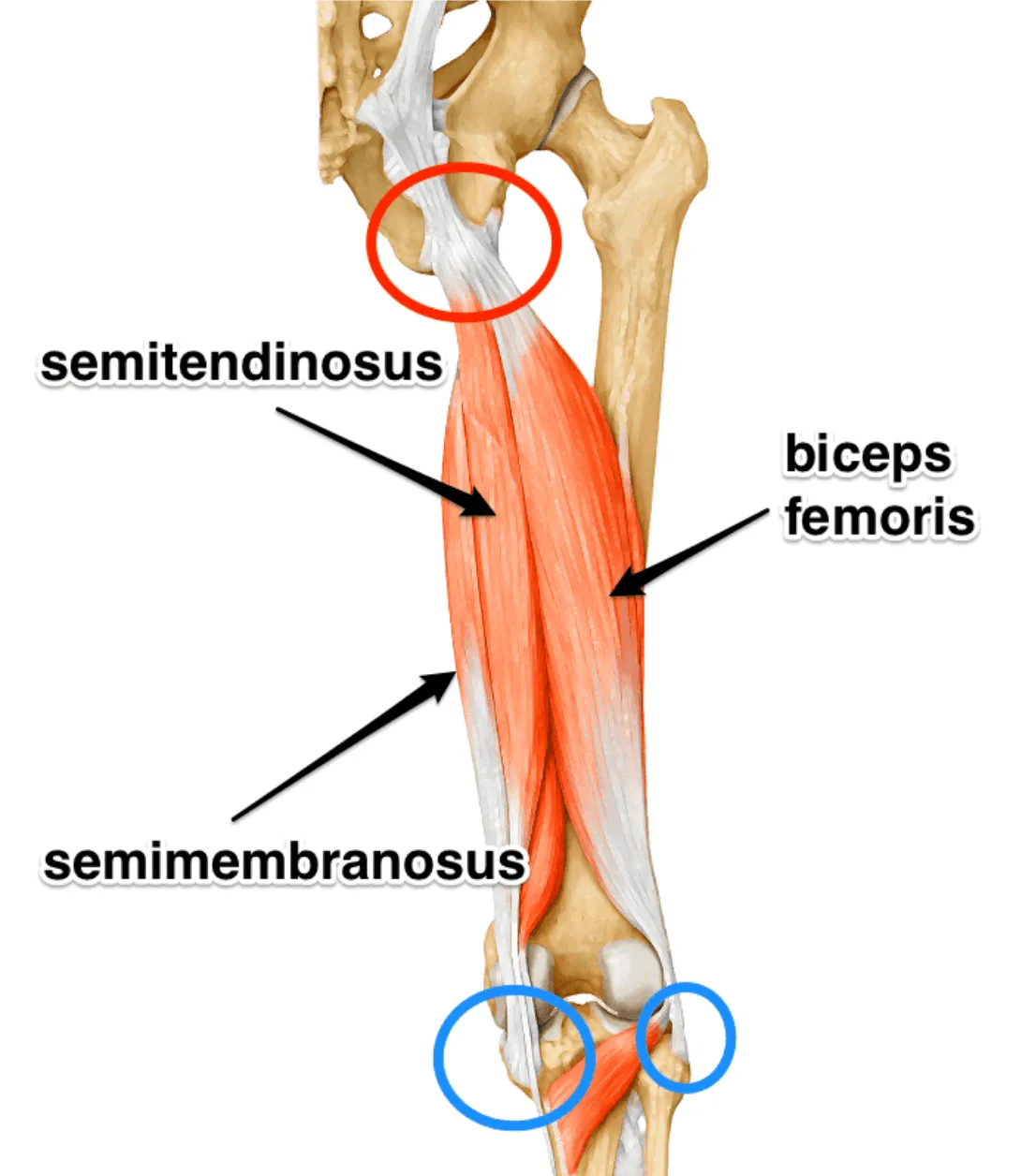
The hamstrings are the large muscles on the back of the thigh. They attach to the ischial tuberosity, the bony sit bone at the bottom of the pelvis. When the tendon at that attachment is overloaded, it can become thickened and painful, a condition called high or proximal hamstring tendinopathy.
It is common in distance runners, sprinters, and athletes who do a lot of hip bending under load, such as lunges or deep squats. Sitting on hard surfaces or for long car rides often makes the pain worse, since the tendon is pressed against the bone.
Common symptoms
- Deep, localized pain at the sit bone
- Pain with prolonged sitting, especially on firm seats
- Pain with running uphill, sprinting, or long strides
- Pain when bending forward with the leg straight
- Stiffness in the back of the thigh after rest
Common causes and risk factors
- Sudden increases in running speed, hills, or mileage
- Exercises that load the hamstrings in a deep stretched position
- Weakness in the hamstrings and glutes
- Long periods of sitting that compress the tendon
How we diagnose it
Dr. Gruner examines the hip and uses simple tests that load the hamstring tendon. Ultrasound at the exam table shows tendon thickening, small partial tears, and irritation of the nearby sciatic nerve. It also helps rule out a larger tear or other sources of buttock pain, such as the lower back or deep hip muscles.
How Propel treats hamstring tendinopathy
The core treatment is a staged strength program that starts with loading the tendon in positions that do not press it into the bone, then builds toward running-specific work. We also adjust training volume, hill work, and sitting habits, and we look at sleep and nutrition, which affect how tendons adapt. Most people keep some level of running throughout.
When pain persists despite good rehab, PRP placed precisely under ultrasound can support tendon healing, including small partial tears. A guided injection may be used to calm irritation around the tendon or nearby nerve. A sudden injury with a pop, large bruise, and weakness can mean the tendon has pulled off the bone, which needs prompt evaluation and often surgical referral.
What to expect at your visit
- 1.
We listen first
Your visit opens with a real conversation: how the problem started, what you have already tried, and the activity you want back.
- 2.
Exam and in-office ultrasound
A hands-on exam, then ultrasound at the exam table, often while you move, so your physician can see the tendon, joint, or nerve involved.
- 3.
A clear diagnosis and plan
You leave knowing what is wrong and what your options are, from strength-based rehab to procedures, and why we recommend each one.
- 4.
Treatment and follow-through
Most procedures happen here in the office. We coordinate with your physical therapist and check progress against the goals you set.
Rehab protocols
Dr. Gruner's week-by-week recovery guidelines. Your plan is individualized; follow these with your physician and physical therapist.
Questions about hamstring tendinopathy
- Should I stretch my hamstrings if I have hamstring tendinopathy?
- Deep hamstring stretches usually aggravate this tendon, because they press it against the sit bone. Strength work in gentler positions tends to help more early on. We show you what to do instead.
- Can I keep running with hamstring tendinopathy?
- Often yes, with changes such as flatter routes, shorter strides, and easier paces while the tendon adapts. We set pain guidelines so you know when to push and when to back off.
- Is a hamstring tendon tear different from tendinopathy?
- Yes. Tendinopathy is a gradual overload problem, while a tear often follows a sudden injury. Small partial tears can be managed without surgery, but a complete tear from the bone usually needs a surgeon, ideally soon after the injury.