
About tennis elbow
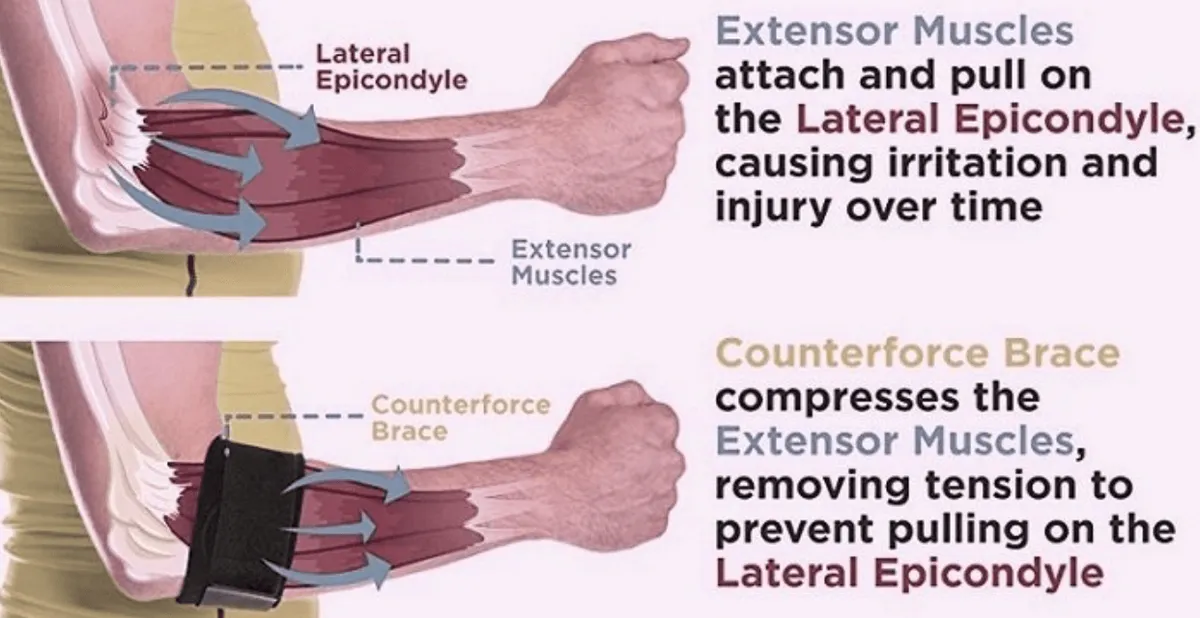
Tennis elbow, or lateral epicondylitis, affects the tendon that anchors to the bony bump on the outer elbow. Despite the name, most people who get it do not play tennis. Gripping, lifting, typing, and tool use can all overload the tendon.
Over time the tendon develops disorganized, weakened tissue rather than simple inflammation, which is why many cases are now called tendinopathy or epicondylosis. This explains why rest, braces, and anti-inflammatory medicines often help only for a while.
Most people improve with the right loading program. For pain that lasts many months despite good rehab, our physicians offer ultrasound-guided procedures aimed at the damaged tendon or the nerves carrying pain.
Common symptoms
- Pain on the outside of the elbow that may spread down the forearm
- Pain with gripping, shaking hands, or lifting a cup
- Weaker grip strength
- Tenderness over the bony bump on the outside of the elbow
- Morning stiffness or pain after activity
Common causes and risk factors
- Repetitive gripping and wrist extension at work or in sport
- A sudden increase in activity, such as a home project or a new racquet
- Middle age, when tendon capacity naturally declines
- Smoking and some metabolic conditions
How we diagnose it
Our physicians confirm tennis elbow with a focused exam, including resisted wrist and finger testing. Ultrasound at the exam table shows tendon thickening, degeneration, partial tears, and new blood vessel growth, and it checks the nearby nerve and joint for other causes. MRI is rarely needed.
How Propel treats tennis elbow
Care begins with progressive tendon loading, a structured strengthening program that builds the tendon's capacity over weeks, along with changes to grip and equipment. We generally avoid repeated steroid injections into the tendon, since they can offer short-term relief but may slow longer-term recovery.
For tennis elbow that has not responded, Dr. Gruner and Dr. Chen offer ultrasound-guided PRP and tendon scraping. Dr. Gruner performs percutaneous tenotomy (Tenex), which removes damaged tendon tissue so healthy tissue can regenerate. Dr. Chen has published novel ultrasound-guided nerve ablation techniques for resistant tennis elbow, which quiet the small nerves carrying pain.
Watch: Tennis Elbow explained
More videos
A patient's experience with a minimally invasive, ultrasound-guided procedure for stubborn tennis elbow.Featuring Dr. Gruner A step-by-step look at treating tennis elbow, from bracing and loading to procedures for resistant cases.Featuring Dr. Gruner Where each condition hurts, which tendon is involved, and why telling them apart changes treatment.Featuring Dr. Gruner
What to expect at your visit
- 1.
We listen first
Your visit opens with a real conversation: how the problem started, what you have already tried, and the activity you want back.
- 2.
Exam and in-office ultrasound
A hands-on exam, then ultrasound at the exam table, often while you move, so your physician can see the tendon, joint, or nerve involved.
- 3.
A clear diagnosis and plan
You leave knowing what is wrong and what your options are, from strength-based rehab to procedures, and why we recommend each one.
- 4.
Treatment and follow-through
Most procedures happen here in the office. We coordinate with your physical therapist and check progress against the goals you set.
Rehab protocols
Dr. Gruner's week-by-week recovery guidelines. Your plan is individualized; follow these with your physician and physical therapist.
Clinical evidence
Published studies our physicians draw on. Results in studies do not predict any one person's outcome.
- Efficacy of platelet-rich plasma for chronic tennis elbow: a double-blind, prospective, multicenter, randomized controlled trial of 230 patientsPubMed
- Ultrasonic Percutaneous Tenotomy for Recalcitrant Lateral Elbow Tendinopathy: Sustainability and Sonographic Progression at 3 YearsPubMed
- Platelet-rich plasma versus Tenex in the treatment of medial and lateral epicondylitisPubMed
Questions about tennis elbow
- Should I wear a brace for tennis elbow?
- A forearm strap can ease pain during activity for some people. It works best as a short-term aid alongside a strengthening program, not as a treatment on its own.
- Are cortisone shots good for tennis elbow?
- Cortisone can reduce pain for a short time, but repeated injections into the tendon may weaken it and slow recovery. We usually favor tendon loading and, when needed, treatments aimed at tendon healing.
- What is the difference between PRP and Tenex for tennis elbow?
- PRP uses a concentrate of your own platelets to support tendon healing. Tenex uses a small ultrasonic probe to remove damaged tendon tissue so healthy tissue can regenerate. Our physicians help you choose based on your exam and ultrasound findings.
- When is nerve ablation used for tennis elbow?
- Nerve ablation is an option for tennis elbow pain that has persisted despite rehab and other treatments. Dr. Chen uses ultrasound to target the small sensory nerves around the elbow that carry pain signals.