
About plantar fasciopathy
The plantar fascia is a strong band of tissue on the sole, stretching from the heel bone toward the toes, and it supports the arch. Plantar fasciopathy develops when the fascia is overloaded and its attachment at the heel becomes thickened and painful. The term fasciopathy reflects that the problem is mostly tissue breakdown rather than inflammation.
It is the most common cause of heel pain in adults. It affects runners and walkers, people who stand for long hours at work, and people who recently gained weight or changed footwear.
Most cases improve with time and the right plan. When pain has lasted many months despite good care, targeted procedures can help you get back on your feet.
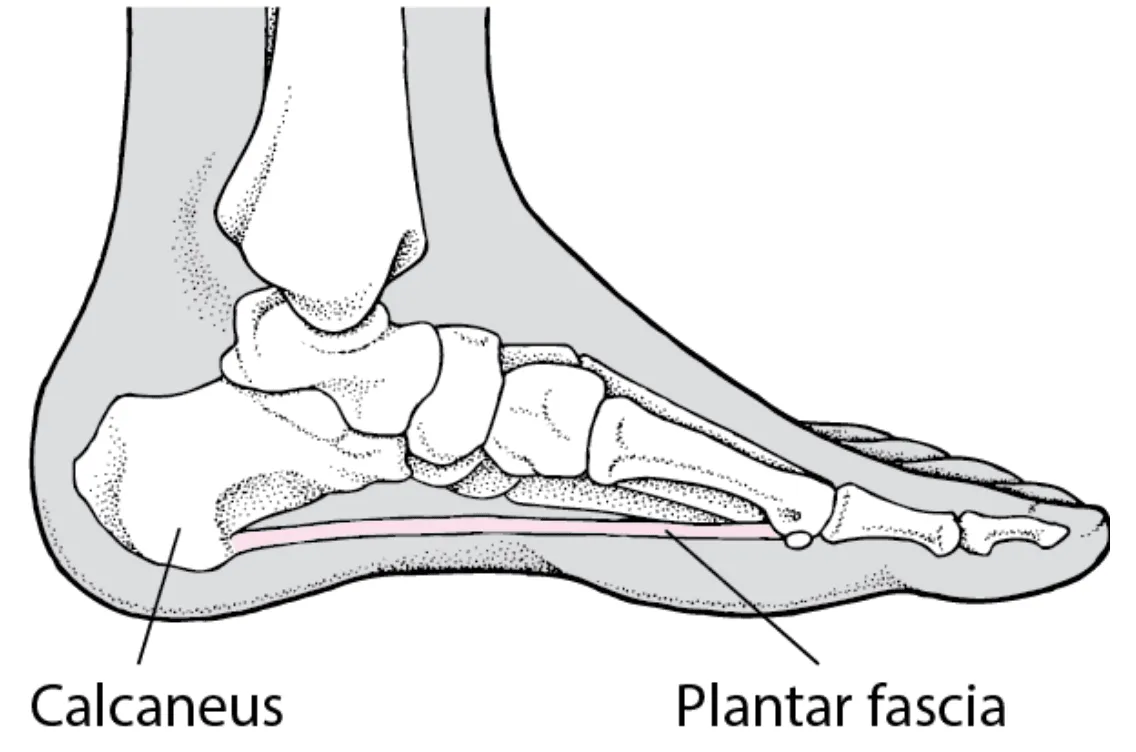
Common symptoms
- Sharp heel pain on getting up in the morning or standing after a long sit
- Pain on the bottom of the heel or along the inner arch
- Pain that eases after a few minutes of walking and returns later in the day
- Pain after long periods of standing or walking
- Tenderness when pressing on the inner bottom of the heel
Common causes and risk factors
- A sudden increase in walking, running, or standing time
- Tight or weak calf and foot muscles
- Unsupportive footwear or hard surfaces
- Higher body weight
- Foot shape, including very flat or very high arches
How we diagnose it
Our physicians diagnose plantar fasciopathy with a focused exam and diagnostic ultrasound at the exam table. Ultrasound measures the thickness of the fascia, shows damaged tissue or small tears, and helps rule out other causes of heel pain, such as a heel fat pad problem, nerve irritation, or a stress fracture.
How Propel treats plantar fasciopathy
Treatment begins with calf and foot strengthening, a gradual walking or running plan, footwear changes, and attention to sleep, recovery, and weight when relevant. Most people get better with this approach, and we aim to keep you active while the heel settles.
When pain lingers, ultrasound-guided PRP can support healing in the fascia, and an ultrasound-guided injection may help calm a flare. Dr. Gruner performs percutaneous tenotomy (Tenex) to remove damaged tissue so healthy tissue can regenerate. For long-standing pain, Dr. Chen offers denervation of the small nerves that carry pain from the plantar fascia.
What to expect at your visit
- 1.
We listen first
Your visit opens with a real conversation: how the problem started, what you have already tried, and the activity you want back.
- 2.
Exam and in-office ultrasound
A hands-on exam, then ultrasound at the exam table, often while you move, so your physician can see the tendon, joint, or nerve involved.
- 3.
A clear diagnosis and plan
You leave knowing what is wrong and what your options are, from strength-based rehab to procedures, and why we recommend each one.
- 4.
Treatment and follow-through
Most procedures happen here in the office. We coordinate with your physical therapist and check progress against the goals you set.
Rehab protocols
Dr. Gruner's week-by-week recovery guidelines. Your plan is individualized; follow these with your physician and physical therapist.
Clinical evidence
Published studies our physicians draw on. Results in studies do not predict any one person's outcome.
- Platelet rich plasma therapy versus other modalities for treatment of plantar fasciitis: A systematic review and meta-analysisPubMed
- Platelet-Rich Plasma Versus Corticosteroids for Plantar Fasciitis: A Systematic Review of Randomized Controlled TrialsPubMed
- Utility of Percutaneous Ultrasonic Tenotomy for Tendinopathies: A Systematic ReviewPubMed
- Retrospective Evaluation of Ultrasound Guided Percutaneous Plantar Fasciotomy With and Without Platelet Rich PlasmaPubMed
- A novel treatment for refractory plantar fasciitisPubMed
Questions about plantar fasciopathy
- Are heel spurs the cause of plantar fasciitis pain?
- Usually not. Heel spurs are common on X-rays in people with and without heel pain. The pain typically comes from the overloaded plantar fascia, not the spur itself.
- Do I need custom orthotics for plantar fasciopathy?
- Many people do well with supportive over-the-counter shoes or inserts. Orthotics can help some people, but strengthening and gradual loading are usually the core of treatment.
- Is a steroid injection a good option for heel pain?
- A steroid injection may reduce pain in the short term, but repeated injections can thin the fascia and the heel fat pad. We use them selectively and place them under ultrasound, and we often prefer options that support healing, such as PRP.