
About knee arthritis
Knee arthritis, also called knee osteoarthritis, happens when the smooth cartilage that lines the ends of the thigh bone, shin bone, and kneecap gradually thins. The joint lining can become irritated, bone spurs may form, and the knee can swell, stiffen, and ache. It is one of the most common reasons adults cut back on walking, running, and the activities they enjoy.
Arthritis is not simply wear and tear that only gets worse. Pain often comes and goes in flares, and many people with changes on an X-ray have little pain, while others hurt a great deal. What happens in the muscles around the knee, your overall activity level, sleep, and body weight all shape how the knee feels day to day.
Our goal is to keep you moving. Staying active is one of the best things you can do for an arthritic knee, and we build a plan that lets you keep exercising rather than handing you a list of things to avoid.
Common symptoms
- Aching pain in or around the knee that worsens with standing, walking, or stairs
- Morning stiffness or stiffness after sitting that loosens up within about half an hour
- Swelling or a feeling of fullness in the knee after activity
- Grinding, clicking, or a crunching sensation with movement
- Reduced ability to fully bend or straighten the knee
- Occasional episodes of the knee feeling weak or unreliable
Common causes and risk factors
- Age-related changes in the joint, often combined with family history
- An old knee injury, such as a meniscus tear or ligament injury
- Extra body weight, which increases the load on the knee with every step
- Weakness in the thigh and hip muscles that support the knee
- Alignment differences, such as bowed legs or knock knees
How we diagnose it
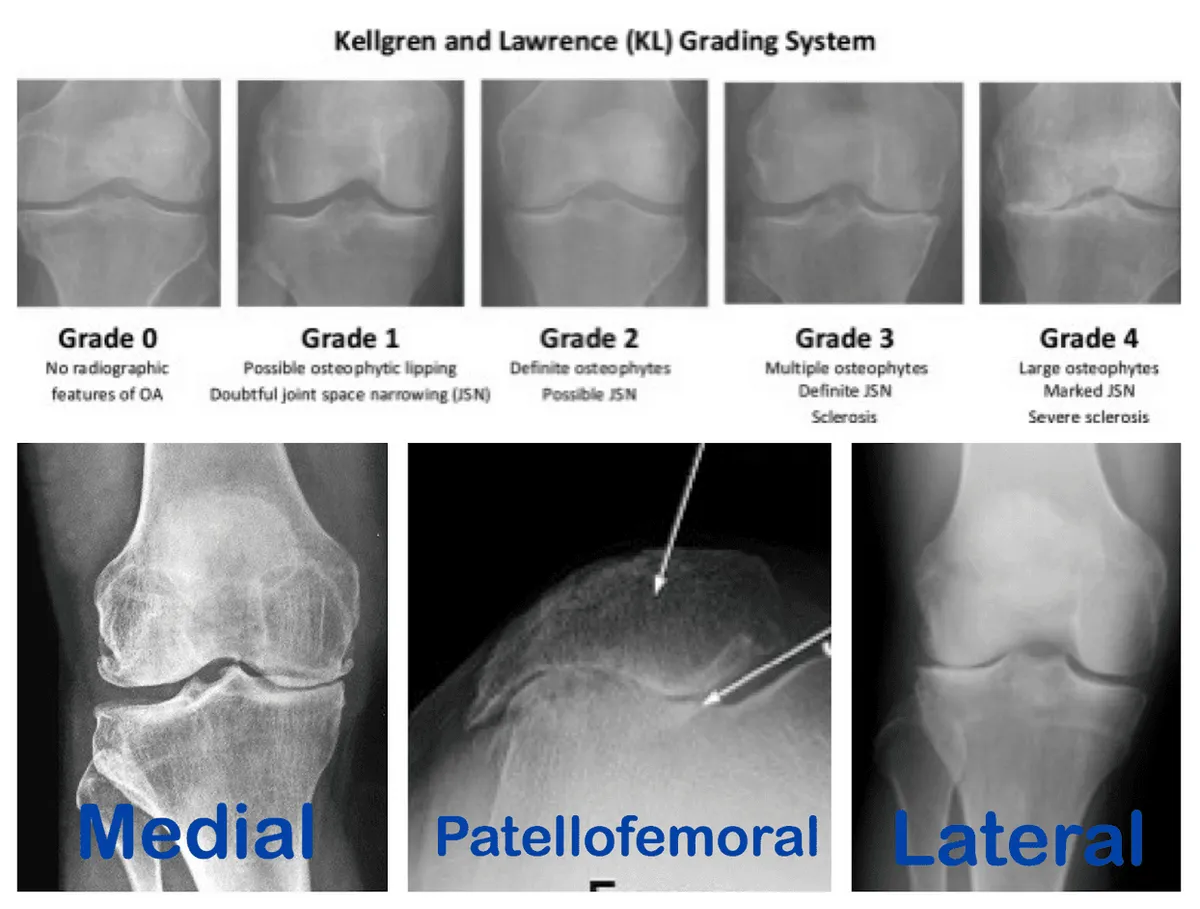
Our physicians start with a detailed conversation and a hands-on exam of the knee, hip, and how you move. We use diagnostic ultrasound at the exam table to look for fluid, an irritated joint lining, a Baker's cyst, or tendon problems that can mimic or add to arthritis pain. Standing X-rays show how much joint space remains and help guide which options make sense for you.
How Propel treats knee arthritis
Conservative care comes first. We build a progressive strength program for the thigh, hip, and calf muscles, adjust training load rather than stopping activity, and look at sleep, nutrition, and weight, since each one affects joint pain. When a flare needs calming, an ultrasound-guided injection places medicine precisely inside the joint, and our physicians perform every procedure themselves.
For ongoing pain, Dr. Gruner and Dr. Chen offer orthobiologic injections: PRP, BMAC (a concentrate from your own bone marrow), and microfragmented adipose tissue (MFAT; your own fat tissue, gently processed). These do not rebuild cartilage, but they may ease pain and improve function. For people delaying or avoiding knee replacement, Dr. Chen performs joint denervation and peripheral nerve stimulation, and when replacement is the better choice, we help coordinate a surgical referral.
- PRP
- BMAC
- Lipogems (microfragmented adipose tissue)
- Hyaluronic Acid
- Cortisone Injection
- Guided Injections
- Nerve Modulation
- Joint Denervation
- PNS
- MSK Ultrasound
- Rehab Planning
Watch: Knee Arthritis explained
More videos
What drives knee osteoarthritis and the steps that help people keep moving with it.Featuring Dr. Gruner How gel (viscosupplement) injections work for knee arthritis and who tends to benefit.Featuring Dr. Gruner Non-surgical steps worth trying for knee pain before considering an operation.Featuring Dr. Gruner
What to expect at your visit
- 1.
We listen first
Your visit opens with a real conversation: how the problem started, what you have already tried, and the activity you want back.
- 2.
Exam and in-office ultrasound
A hands-on exam, then ultrasound at the exam table, often while you move, so your physician can see the tendon, joint, or nerve involved.
- 3.
A clear diagnosis and plan
You leave knowing what is wrong and what your options are, from strength-based rehab to procedures, and why we recommend each one.
- 4.
Treatment and follow-through
Most procedures happen here in the office. We coordinate with your physical therapist and check progress against the goals you set.
Rehab protocols
Dr. Gruner's week-by-week recovery guidelines. Your plan is individualized; follow these with your physician and physical therapist.
Clinical evidence
Published studies our physicians draw on. Results in studies do not predict any one person's outcome.
- Platelet-rich plasma versus hyaluronic acid in the treatment of knee osteoarthritis: a meta-analysisPubMed Central
- Platelet-Rich Plasma Versus Hyaluronic Acid for Knee Osteoarthritis: A Systematic Review and Meta-analysis of RCTsPubMed
- Platelet-Rich Plasma Combined With Hyaluronic Acid Improves Pain and Function Compared With Hyaluronic Acid Alone in Knee OsteoarthritisPubMed
- Microfragmented Adipose Tissue Injection (MFAT) May Be a Solution to the Rationing of Total Knee Replacement: 2-Year AnalysisPubMed Central
- Two-year clinical outcomes of autologous microfragmented adipose tissue in elderly patients with knee osteoarthritisPubMed
Questions about knee arthritis
- Is it safe to keep exercising with knee arthritis?
- Yes, for most people exercise is one of the most helpful treatments for knee arthritis. Strength training and low-impact cardio can reduce pain and improve function over time. Some soreness during or after exercise is common, and we help you adjust the load so the knee settles by the next day.
- Can PRP grow back cartilage in an arthritic knee?
- No. PRP and other orthobiologic injections do not rebuild cartilage in the knee. They may reduce pain and improve how the knee works, which can make it easier to stay active and keep up with strength training.
- What is the difference between joint denervation and a knee replacement?
- Joint denervation treats the small sensory nerves that carry pain signals from the knee, so it targets pain without changing the joint itself. A knee replacement removes the damaged joint surfaces and replaces them with an implant. Denervation is an option for people who are not ready for, or not good candidates for, replacement surgery.
- When should knee arthritis be seen by a surgeon?
- Surgery is worth discussing when pain limits daily life despite a good trial of conservative care, or when the knee is badly deformed or unstable. We talk through this openly and help coordinate a referral when replacement is the right step.