
About carpal tunnel syndrome
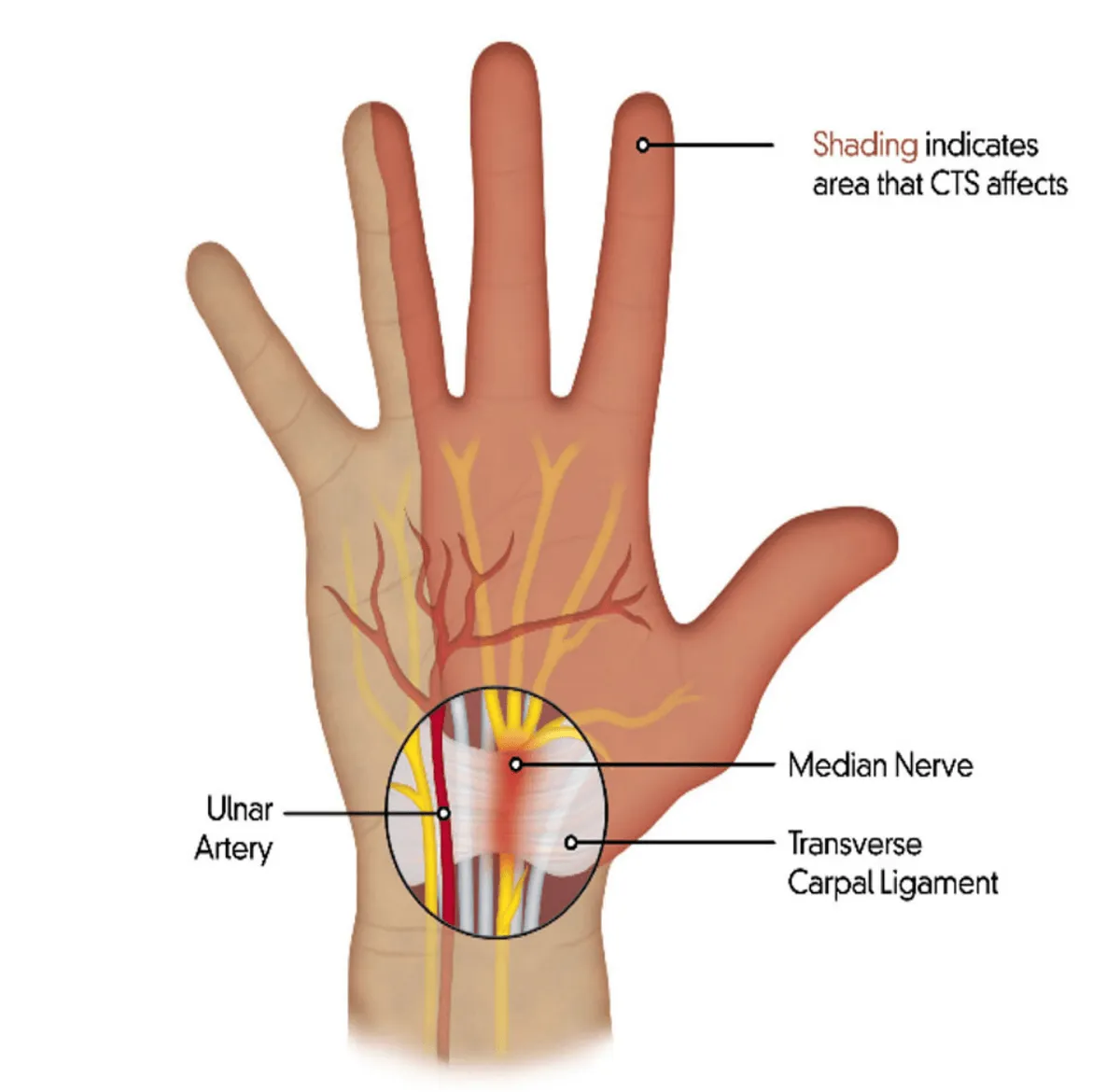
The carpal tunnel is a narrow passage on the palm side of the wrist. Nine tendons and the median nerve share this space, with a firm band of tissue, the transverse carpal ligament, forming its roof. When pressure inside the tunnel rises, the nerve gets squeezed and starts to send abnormal signals.
The median nerve supplies feeling to the thumb, index, middle, and part of the ring finger, so those are the fingers that tingle or go numb. Symptoms often show up at night because many people sleep with their wrists bent, which narrows the tunnel further. Shaking the hand out often brings brief relief.
Left alone for a long time, ongoing pressure can weaken the small muscles at the base of the thumb. That is why we take persistent numbness seriously and aim to relieve the pressure before lasting nerve changes set in.
Common symptoms
- Pins and needles or numbness affecting the thumb, index, and middle fingers
- Symptoms that wake you at night or show up while driving, typing, or holding a phone
- A weaker grip or a tendency to drop small objects
- Aching that can spread from the wrist up into the forearm
- Thinning of the muscle pad at the base of the thumb in longstanding cases
Common causes and risk factors
- Repetitive gripping, wrist bending, or vibrating tools
- Swelling from pregnancy, thyroid conditions, or fluid retention
- Diabetes, which makes nerves more sensitive to pressure
- Wrist arthritis or an old wrist fracture that narrows the tunnel
- Anatomy, since some people are simply born with a smaller tunnel
How we diagnose it
We start with a careful history and hands-on exam, including tests that tap or gently press over the nerve. Our physicians then look at the median nerve with ultrasound right in the exam room, measuring its size and watching how it moves as you flex your fingers. When the picture is unclear, or when we need to know how much the nerve is affected, Dr. Chen can perform an EMG and nerve conduction study with nerve ultrasound. Testing also helps rule out a pinched nerve in the neck, which can cause similar tingling.
How Propel treats carpal tunnel syndrome
Mild or early carpal tunnel syndrome often settles with conservative care. That may include a night splint that keeps the wrist straight, changes to how you grip and work, and nerve gliding exercises. An ultrasound-guided injection can calm swelling in the tunnel, and nerve hydrodissection uses fluid placed around the nerve to free it from tissue that is pinning it down.
When symptoms keep returning or nerve testing shows significant pressure, releasing the ligament is the most reliable fix. Dr. Gruner performs ultrasound-guided carpal tunnel release in the office through a tiny incision while watching the nerve on screen the whole time. Most people use the hand for light tasks soon after, then build back grip strength with a guided plan. Constant numbness or visible thumb muscle wasting deserves prompt evaluation.
Watch: Carpal Tunnel Syndrome explained
More videos
Comparing the procedure options for carpal tunnel syndrome when conservative care isn't enough.Featuring Dr. Gruner How nerve compression and joint arthritis in the hand feel different, and why the distinction matters.Featuring Dr. Gruner
What to expect at your visit
- 1.
We listen first
Your visit opens with a real conversation: how the problem started, what you have already tried, and the activity you want back.
- 2.
Exam and in-office ultrasound
A hands-on exam, then ultrasound at the exam table, often while you move, so your physician can see the tendon, joint, or nerve involved.
- 3.
A clear diagnosis and plan
You leave knowing what is wrong and what your options are, from strength-based rehab to procedures, and why we recommend each one.
- 4.
Treatment and follow-through
Most procedures happen here in the office. We coordinate with your physical therapist and check progress against the goals you set.
Rehab protocols
Dr. Gruner's week-by-week recovery guidelines. Your plan is individualized; follow these with your physician and physical therapist.
Clinical evidence
Published studies our physicians draw on. Results in studies do not predict any one person's outcome.
Questions about carpal tunnel syndrome
- Is ultrasound-guided carpal tunnel release the same as open surgery?
- It releases the same ligament, but through a much smaller opening, with live ultrasound showing the nerve, blood vessels, and ligament throughout. It is done in the office rather than an operating room. Many people find recovery is quicker and less painful than after a traditional open release.
- Do I need a nerve test before treatment for carpal tunnel?
- Not always. A clear history, exam, and nerve ultrasound are often enough to start conservative care. Nerve testing is helpful when symptoms are severe, when the diagnosis is uncertain, or before a release procedure.
- Can carpal tunnel syndrome go away on its own?
- Mild cases, especially those tied to pregnancy or a short burst of heavy hand use, sometimes ease with time, splinting, and activity changes. Symptoms that last for months or keep getting worse are less likely to settle without treatment. Numbness that becomes constant is a sign to be seen sooner.